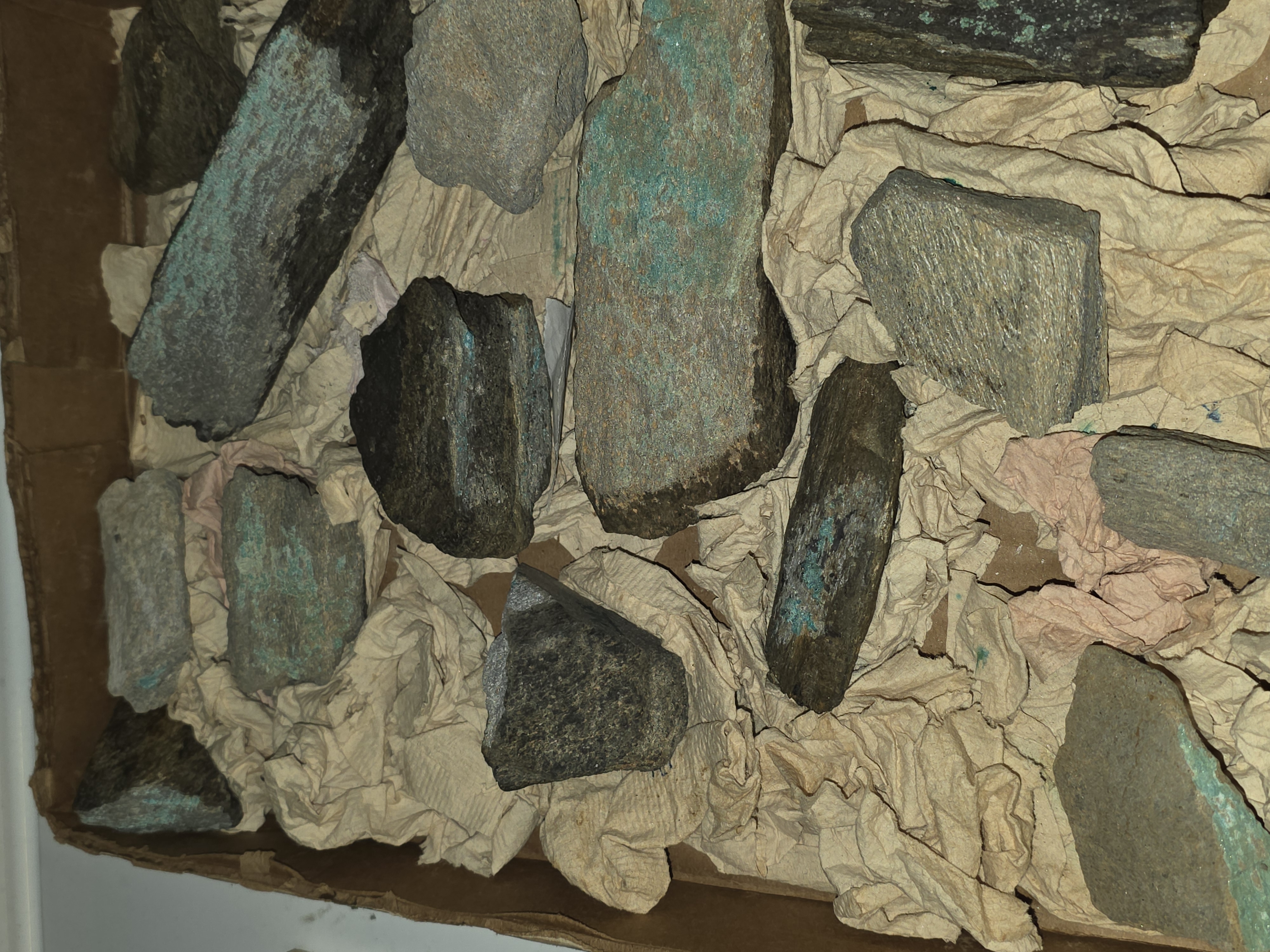
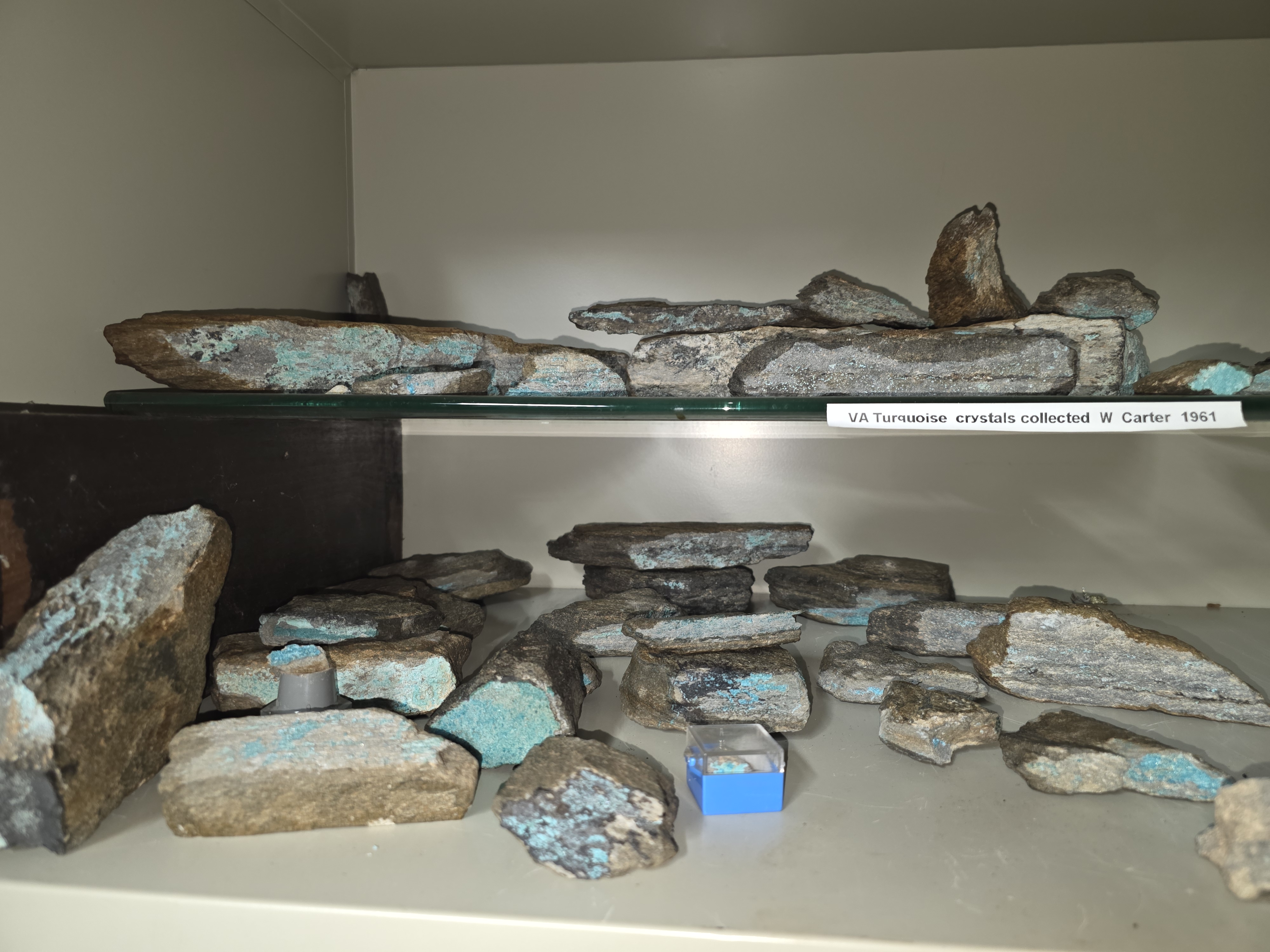
Discovery: A Copper Prospect Yields a Mineralogical First
Bishop Mine sits on a low ridge in Campbell County, Virginia, roughly two miles southeast of the small community of Lynch Station. The surrounding Piedmont geology — deeply weathered metamorphic rocks rich in aluminum and phosphorus — had long attracted small-scale copper prospecting. But when miners broke into a secondary copper-phosphate zone around 1909–1911, they uncovered turquoise unlike anything documented in the scientific record.
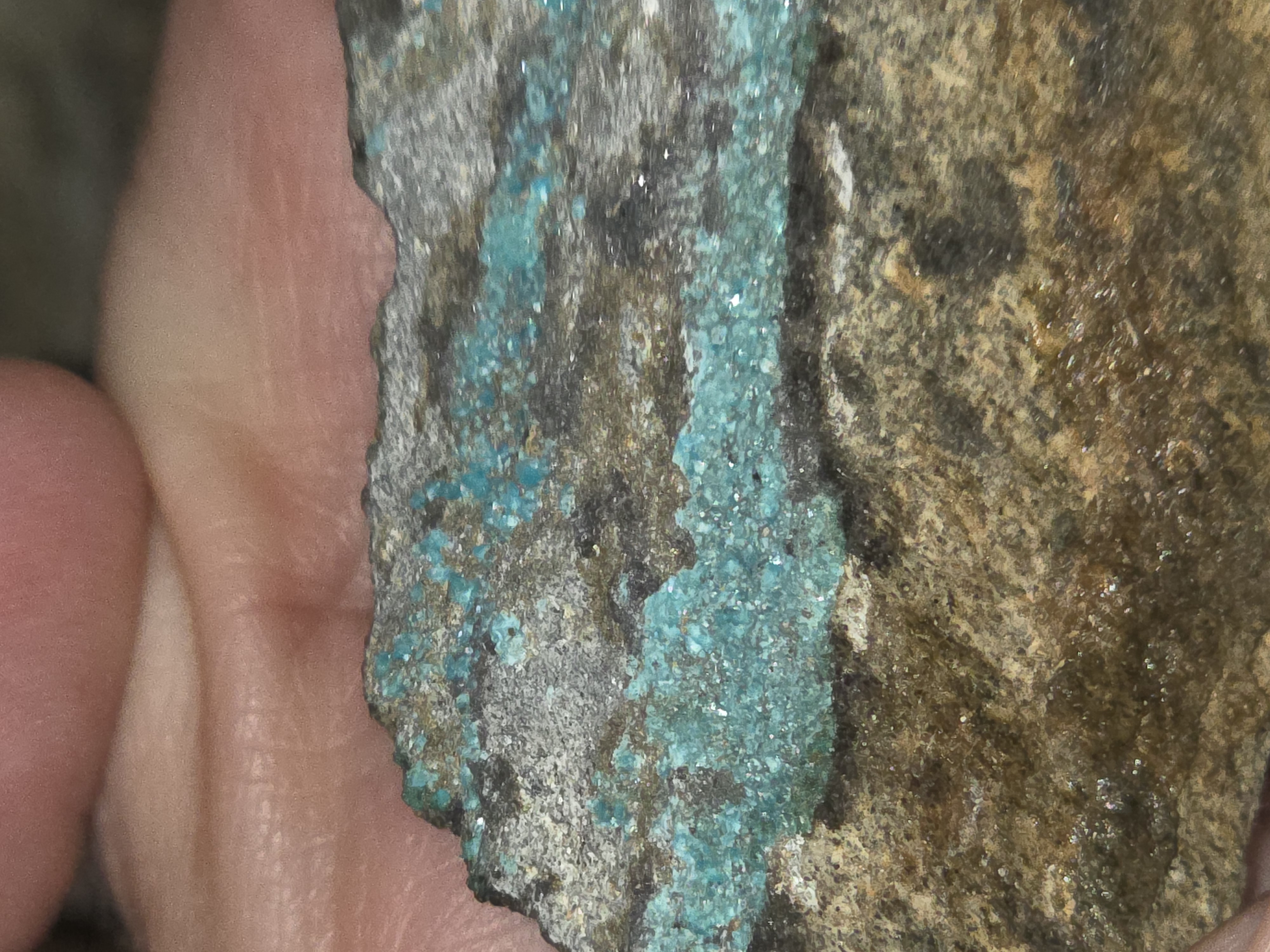
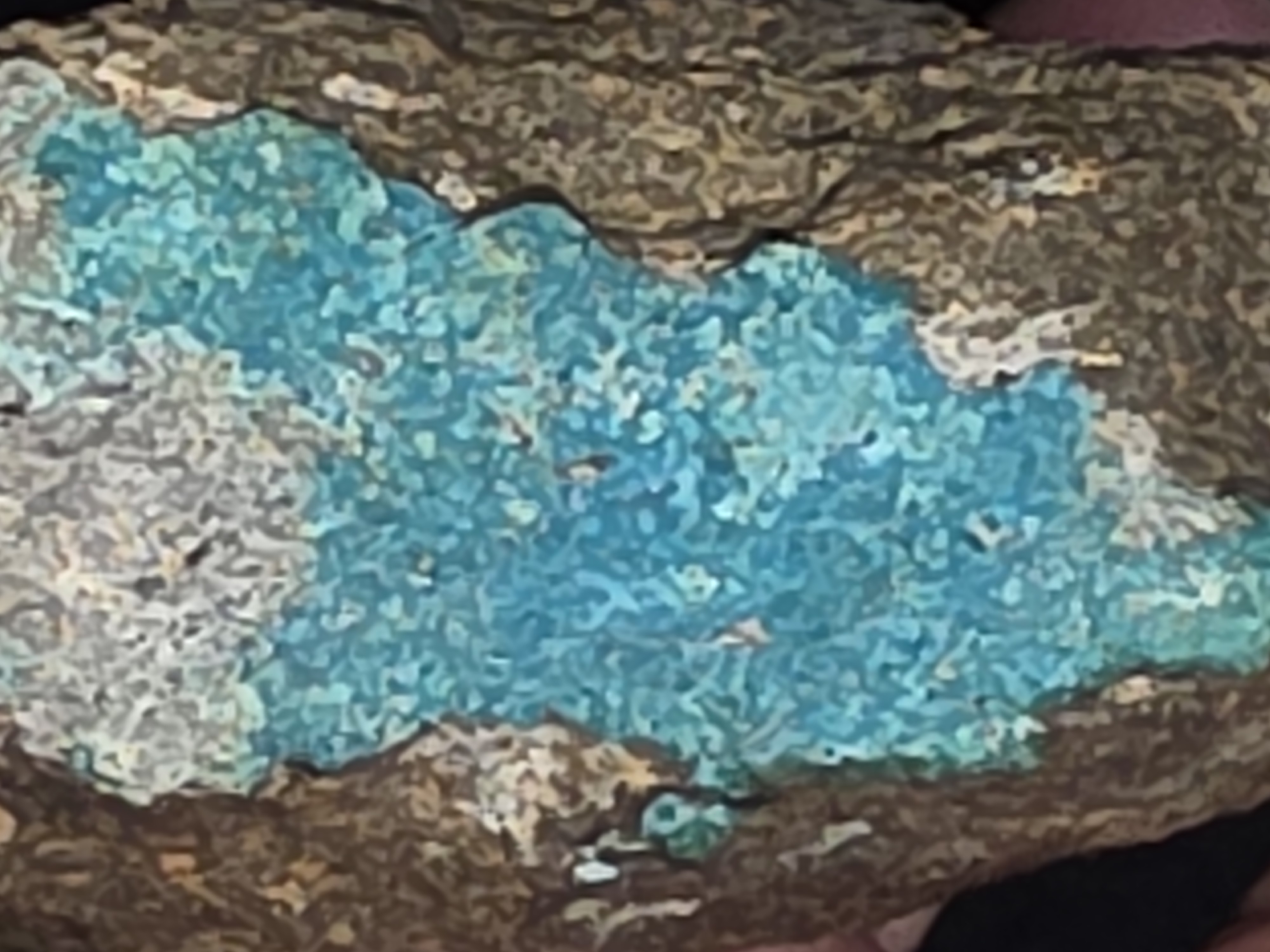
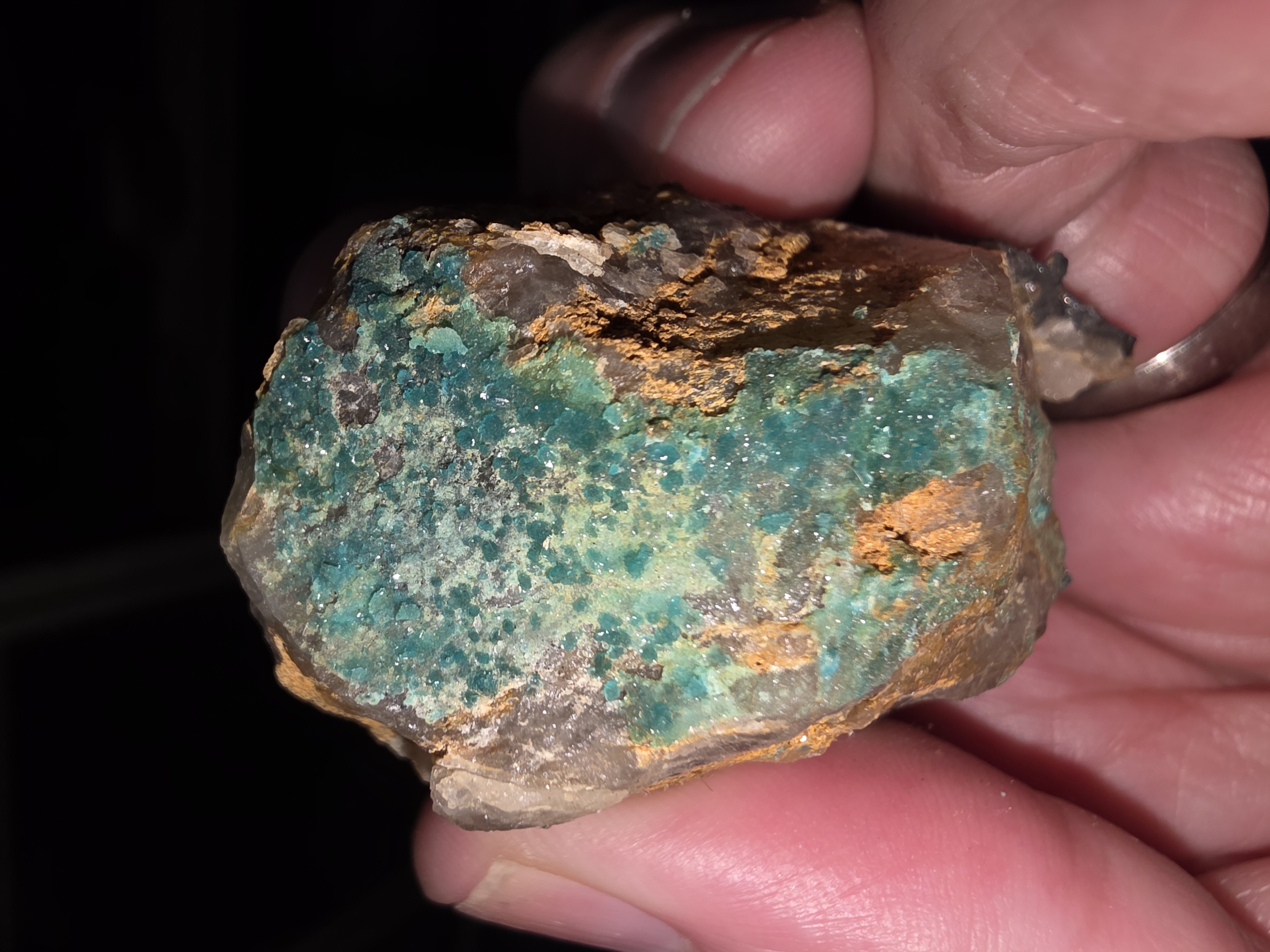
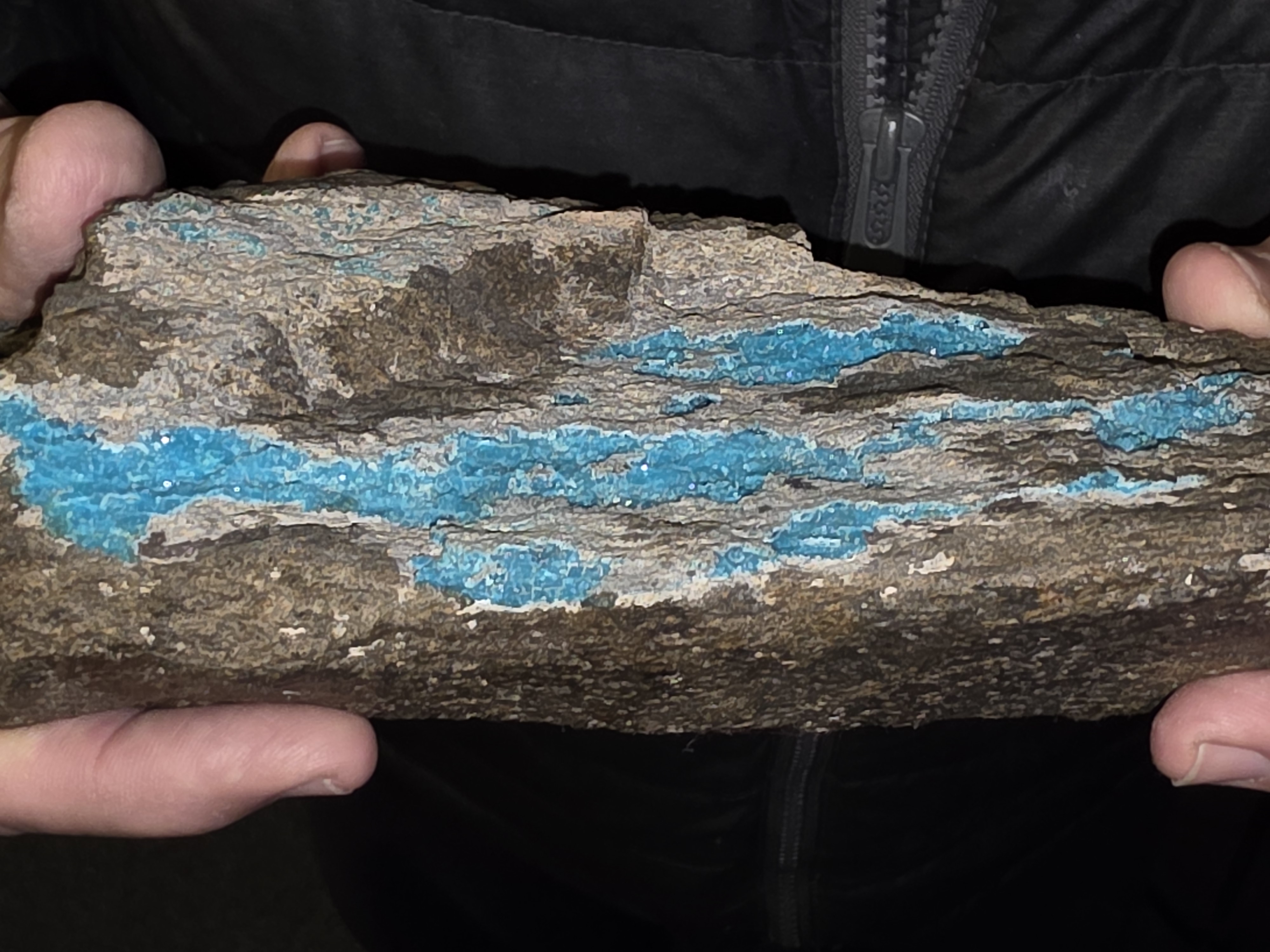
Instead of the massive, opaque nodules familiar from Arizona and Nevada, Bishop Mine produced individual crystals — tiny, translucent prisms of vivid sky-blue to deep electric blue, growing freely on a quartz-limonite matrix. These crystals were sent to mineralogists for study, and by 1911, analysis confirmed what the crystals' sharp faces had already suggested: turquoise belongs to the triclinic crystal system.
Why This Matters to Mineralogy
Before Bishop Mine, turquoise was known only in massive or cryptocrystalline form — opaque lumps with no visible crystal structure. The prevailing assumption was that turquoise was amorphous or, at best, microcrystalline with an uncertain crystal system. Bishop Mine specimens provided the first definitive proof that turquoise crystallizes in the triclinic system (space group P̒1), settling a question that had persisted for decades. This discovery fundamentally changed how turquoise was classified in mineralogy textbooks worldwide.
Geological Setting: Virginia's Piedmont Province
Campbell County lies within Virginia's Piedmont physiographic province, a region of ancient metamorphic and igneous rocks that have been weathered and reworked over hundreds of millions of years. The Bishop Mine deposit formed where copper-bearing fluids, aluminum-rich clays, and phosphorus-rich groundwater converged in a deeply oxidized zone above a primary copper sulfide body.
Formation Conditions
Turquoise is a hydrated copper aluminum phosphate with the formula CuAl₆(PO₄)₄(OH)₈·4H₂O. It forms in the supergene oxidation zone where copper leaches downward from weathering sulfide ores and reacts with aluminum and phosphorus in the host rock. At most deposits, this process produces only massive, microcrystalline turquoise — the familiar opaque gemstone of the American Southwest.
What made Bishop Mine exceptional was the unusually slow, stable crystallization environment. Open cavities in the quartz-limonite matrix gave crystals room to grow freely, and the chemistry of the percolating solutions remained favorable long enough for individual crystals to develop well-formed faces. The result: euhedral triclinic crystals, often in rosette or wheat-sheaf aggregates, sometimes translucent to nearly transparent.
Mineralogical Profile
| Property | Details |
|---|---|
| Mineral | Turquoise |
| Chemical Formula | CuAl₆(PO₄)₄(OH)₈·4H₂O |
| Crystal System | Triclinic (space group P̒1) |
| Hardness | 5–6 on the Mohs scale |
| Specific Gravity | 2.6–2.8 |
| Luster | Vitreous to waxy on crystal faces |
| Color Range | Sky blue, electric blue, blue-green; pale to vivid saturation depending on copper content |
| Transparency | Translucent to nearly transparent (micro-crystals); opaque in massive form |
| Crystal Habit | Short prismatic, tabular; commonly in rosettes, wheat-sheaf aggregates, and druzy coatings |
| Matrix | Quartz-limonite host rock; iron oxide staining common |
| Locality | Bishop Mine, Lynch Station, Campbell County, Virginia, USA |
Crystal Habit and Morphology
Bishop Mine turquoise occurs in several distinct habits. The most prized are rosette formations — radiating clusters of individual crystals that fan outward from a central point, creating flower-like arrangements of vivid blue. Wheat-sheaf aggregates are similar but more elongated, with crystals splaying outward like bundled grain stalks. Individual crystals, while small (typically under 2mm), display well-defined triclinic faces with a vitreous luster that distinguishes them instantly from massive turquoise.
The color range spans from pale sky blue (lower copper content) through vivid electric blue (optimal copper saturation) to blue-green (iron substitution for some copper). The finest specimens show deep, saturated blue with translucent crystal faces that allow light to pass through — a property no other turquoise locality can match.
Mine History: 1911–1945
Copper prospecting activity in the Lynch Station area uncovers unusual blue mineral specimens in oxidized zones above sulfide deposits. Local miners note the material differs from any known copper mineral.
First scientific identification. Specimens sent for analysis are confirmed as turquoise in crystalline form — a world first. The discovery proves turquoise belongs to the triclinic crystal system, resolving a long-standing mineralogical debate.
Small-scale mining continues intermittently, primarily as a copper prospect with turquoise as a valuable byproduct. Specimens enter mineral collections worldwide, establishing Bishop Mine's reputation among serious collectors.
Mining activity declines as accessible oxidized zones are depleted. The deeper sulfide body lacks the unique crystallization conditions that produced the famous turquoise specimens.
Mining ceases. After approximately 34 years of operation, Bishop Mine closes permanently. The site gradually reclaims. No new specimens are produced from this point forward.
Why Bishop Mine Specimens Are Irreplaceable
Three factors combine to make Bishop Mine turquoise among the rarest collector minerals in the world:
1. Geological Uniqueness
No other locality on Earth has produced turquoise in true crystalline form under commercially documented conditions. While trace micro-crystals have been reported at a handful of other deposits, none approach the size, quality, or abundance of Bishop Mine specimens. The specific combination of open-cavity growth space, stable solution chemistry, and prolonged crystallization time appears to be geologically unique to this deposit.
2. Finite Supply
The mine closed in 1945. Every specimen in existence was collected during the mine's 34-year operating life or recovered from historic collections. There is no new production and no realistic prospect of future production — the oxidized zone that created these crystals was mined out decades ago.
3. Scientific Significance
These specimens are referenced in mineralogy textbooks and museum collections worldwide as the type locality material for crystalline turquoise. Owning a Bishop Mine specimen is owning a piece of mineralogical history — the physical evidence that settled the question of turquoise's crystal system.
Collector Market and Valuation
Bishop Mine turquoise trades in a specialized market segment that overlaps rare mineral collecting and historical specimen collecting. Prices have appreciated steadily as the finite supply shrinks and awareness grows among new collectors.
| Specimen Tier | Size | Price Range | Market Notes |
|---|---|---|---|
| Thumbnail | Under 1″ | $150–$350 | Entry-level collector pieces. Genuine Bishop Mine locality with visible crystal structure. |
| Cabinet | 1–3″ | $600–$1,200 | Prime collector grade. Comparable to dealer retail at major mineral shows ($950–$1,000+). |
| Large Cabinet | 3–5″ | $1,200–$2,500+ | Display or institutional quality. Museum-grade crystal coverage and color saturation. |
| Museum / Investment | 5″+ | $2,500–$5,000+ | Exceptional specimens with superior provenance. Investment-grade positioning similar to Lander Blue turquoise. |
Where Bishop Mine Specimens Trade
Serious collectors acquire Bishop Mine turquoise through specialty mineral auction platforms like e-Rocks and MineralBids, established dealers such as Dave Bunk Minerals and The Arkenstone (iRocks.com), and regional mineral shows including the Tucson Gem & Mineral Show and Shenandoah Valley show circuit. Heritage Auctions occasionally handles museum-quality pieces that establish price benchmarks.
The key pricing driver is locality scarcity: Bishop Mine is the only source. Unlike Southwestern turquoise where dozens of mines compete for the same collector dollar, Virginia crystalline turquoise has no substitute. Specimens with strong color saturation, visible crystal structure, and documented collection provenance command the highest premiums.
Our Collection
EcoFabLab by L3 LLC maintains an authenticated collection of Bishop Mine crystalline turquoise specimens spanning multiple size tiers. Each piece carries verified Lynch Station provenance and has been cataloged with full mineralogical data. Browse individual specimens below, or request a private showing to examine pieces in person.